

Dig Less, Find More: A Pickaxe-Saving Plan for Treasure Hunt
Updated Oct 25, 2026
Treasure Hunt is partly a luck game, and no trick changes that. What you can control is how many pickaxes you throw at empty dirt. Two players with the same stock of pickaxes can finish the event with very different key counts, and the gap almost always comes from three habits: spreading digs across boards, locating before excavating, and digging where bombs can help.
How the event is laid out
There is no sign-up phase like Fishing has. Your team forms the moment you open the event: the lobby starts with four open seats, each filled by a personal invite. Every invited player gets a separate board shared only with you. Tap their card and you see the board flanked by both avatars; any tile either of you opens is open for both.
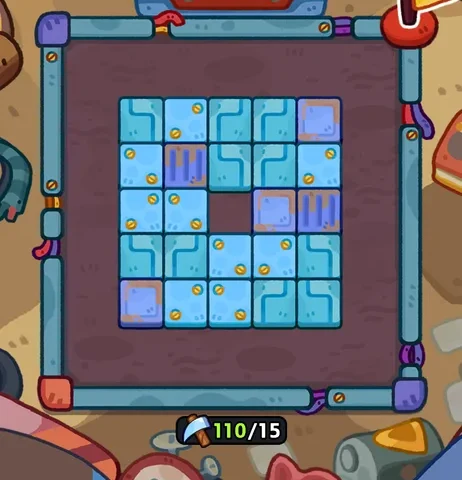
A frame above the board shows the outlines of the objects hidden on that stage. A treasure only counts once every tile of its shape is uncovered, and the board moves to the next stage after all required objects are found. Empty tiles are not always empty: they can hold candy, a pinball, or a bomb that clears nearby tiles.
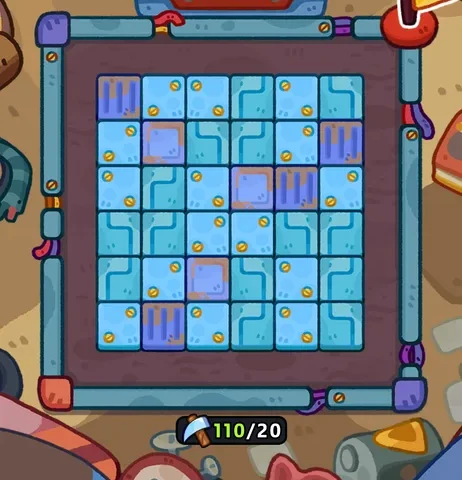
The counter along the bottom shows your pickaxes and the cost per tile. In our screenshots, a fresh board charged 15 pickaxes per tile through its first three stages and 20 per tile at Stage 4.
Cost rises, rewards rise
Each board levels up on its own. Higher stages pay more but cost more per tile and take longer to clear. The pinball reward for clearing a stage, for instance, went from 60 at Stage 1 to 180 at Stage 4 in the run we looked at. That trade-off is the heart of the event: the cheap stages on several boards are usually better value than pushing one board deep.
Keys and the chest in the middle
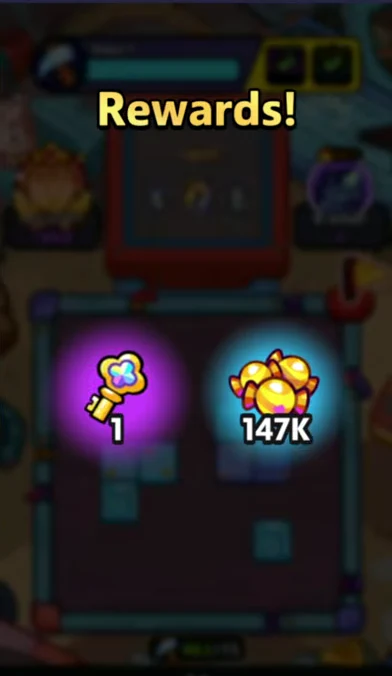
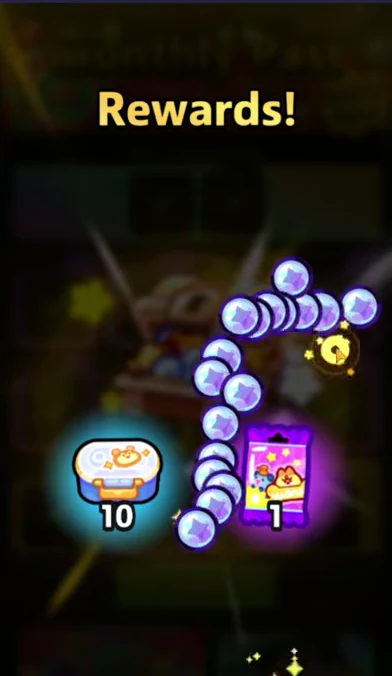
Clearing the first three stages of a board earns a key, along with a pile of something else (a six-figure candy drop is common). Four keys unlock the big chest at the centre of the lobby, and once opened, a better chest takes its place.
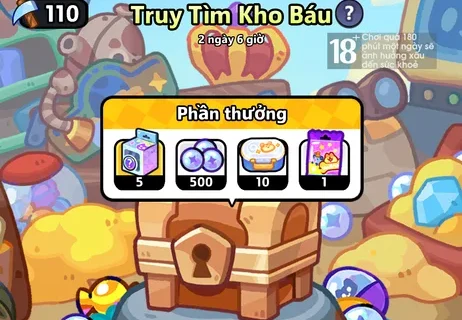
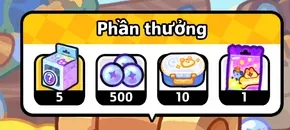
The preview of that chest listed 5  , 500 pinballs, 10 bento and a Standard Card Pack, and the pack can roll a four-star card. Those four keys can technically all come from one partner, but since deeper stages cost more per tile, spreading your pickaxes across all four boards gets keys more cheaply and lets you open more chests.
If an evolution trial is on your list, check how it counts. Several ask for treasures dug up rather than pickaxes spent: Electroar → Blitzmane
 wants 70, and Rockshell
 → Terraton
 or Lilypo
 → Gemmapo
 want 120 (each also has a Cozy Farm fertiliser option).
Banking pinballs when there is no rewards tab
Most events let you park earnings in a tab and collect them whenever you choose. Treasure Hunt does not. Everything waiting on a shared board is claimed the moment you step onto it. A red gift icon on a partner's lobby card means rewards have piled up there.
So if you are saving pinballs for the next event, the order is:
- Stay off your partners' boards for the first two days and let them dig.
- On day three, open each board to sweep up everything at once.
- Then spend your own pickaxes on those boards so your partners are not carrying you.
Warn your team before you do this. A partner who sees zero contribution from you for two days will assume you quit. If you are not banking for anything, just dig normally.
A five-step digging routine
- Probe unknown ground first. Bombs never sit on object tiles, so open areas where nothing has been found yet. That is where free tile clears come from.
- Hit an object? Leave it. Once you know a tile belongs to an object, its neighbours are likely part of it too. You can finish it later; right now, its location is what you needed.
- Use the outlines. Compare the uncovered piece with the silhouettes in the top frame to guess the shape and which way it runs.
- Excavate last. Only when every object on the stage is located should you spend pickaxes clearing the remaining tiles of each.
- Let a solver narrow it down. The Tatadex treasure solver takes the tiles you have opened and highlights the most promising ones to dig next. It cannot be certain, but it removes most blind guesses.
A bomb that opens two tiles at Stage 1 saves you 30 pickaxes, and now and then one uncovers an entire small object on its own. Occasionally a mole surfaces somewhere on the grid; tapping it gives a single pinball, more of a wink from the developers than a strategy.
Being a partner people want next time
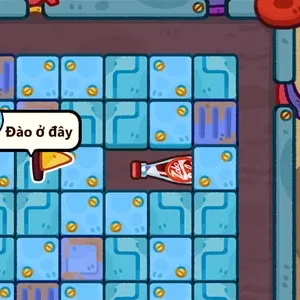
- Flag what you cannot dig. Out of pickaxes but sure where something is? Drop a flag on that tile using the button in the board's upper corner and your partner sees a "Dig here" marker.
- Watch contribution numbers. The figure under each avatar is the pickaxes that player has spent on the board, so you can see at a glance who is pulling their weight.
- Share the load. Whatever either of you digs up, both of you receive when you enter the board. Spread your pickaxes over every partner's board, not just your favourite.
- Choose partners deliberately. You cannot leave once the team is set, so invite people who you know will dig.
Quick reminders for the other rotations live in the field card for every event, and the events section collects every event guide in one place.
Tatadex verdict
Treasure Hunt involves luck, so Fox thinks the realistic goal is wasting fewer pickaxes, not hitting every time. Locate the items first, then dig the rest, and spread pickaxes across several boards instead of one expensive high-level board.
To find items faster, Fox built the Treasure Hunt digging tool on Tatadex: tap the cells you've dug and pick the item, and it highlights the cells worth digging next. It can't be certain, but it cuts down on blind digging.
Treasure Hunt digging tool →Keep reading
- Pinball Banking: Riding the Five-Event Loop Without Running Dry
- Five Events, Five Habits: A Field Card for Every Rotation
- Marathon Party Without Waste: Boards, Boxes and a Three-Day Plan
- Zobo Shooter Explained: Arenas, Hit Rolls and Chest Pools
- Boss Hunting in Zobo Shooter: Squeezing More Chests from Every Coin
- Growing Heavy Crops in Cozy Farm: Support First, Fertiliser Second
- Gone Fishing: Records, Rods and the Ten-Minute Bait Window
- Island Gold Rush Playbook: Tiles, Squads and Status Effects